Food flashcards are one of those simple learning tools that can make such a big difference when kids are little. Whether you’re teaching toddlers their first words, helping preschoolers recognize everyday foods, or just looking for a fun screen-free activity, flashcards are such an easy thing to pull out during the day. I used flashcards so much when my boys were younger because they were quick, colorful, and honestly fun for kids to look at. You can use them during snack time, while waiting for dinner, in the car, or even during pretend play with toy kitchens and grocery stores.
One of the best things about food flashcards is that they help kids connect pictures to real-life objects they see every day. Young children learn best through repetition and visual learning, and flashcards are wonderful for both. Seeing a picture of a banana, cookie, milk, or eggs while hearing the word spoken out loud helps little ones begin building vocabulary naturally. Over time, they start recognizing the foods in real life too, which can make learning feel exciting and familiar.
Food flashcards are especially great for toddlers and preschoolers because food is something they already know and love. Kids get excited when they recognize things they eat often. If you hold up a card with pizza on it, most little kids instantly light up because they know exactly what it is. That excitement helps hold their attention longer, which is honestly half the battle when teaching younger children.
Another thing I love about using flashcards is that there are so many ways to use them beyond simply holding them up and saying the words. You can turn them into games and activities to keep learning playful and engaging.
Here are a few fun ways to use food flashcards with kids:
- Ask your child to point to a specific food.
- Have them match the flashcard to a real food item in your kitchen.
- Let them sort foods by color.
- Use the cards while pretending to shop for groceries.
- Hide the cards around the room for a fun scavenger hunt.
- Practice beginning sounds like “b” for bread or “m” for milk.
- Use them as conversation starters during snack time.
- Let older preschoolers practice reading the words underneath.
You can also use food flashcards for speech development and language practice. Repeating simple words while pointing to the image can help encourage verbal skills in toddlers and younger preschoolers. Kids who are learning English can benefit from them too because the visuals make the connection between the word and object easier to understand.
Another fun idea is to laminate the flashcards so they last longer. Laminated cards are great for little hands and can be wiped clean easily. You can even punch a hole in the corner and place them on a binder ring to keep them together. I always loved keeping learning supplies organized in little baskets or pouches because it made it easy to grab them quickly during the day.
Food flashcards can also encourage picky eaters to become more familiar with foods in a low-pressure way. Sometimes kids are more open to learning about foods through play before they are willing to try them on their plate. Looking at colorful flashcards of apples, eggs, bananas, and bread can make food feel more approachable and fun.
If you homeschool or simply like doing learning activities at home, flashcards are one of those supplies you’ll use again and again. They don’t require prep work, complicated instructions, or a huge mess to clean up afterward. You can keep them simple or turn them into full activities depending on your child’s age and attention span.
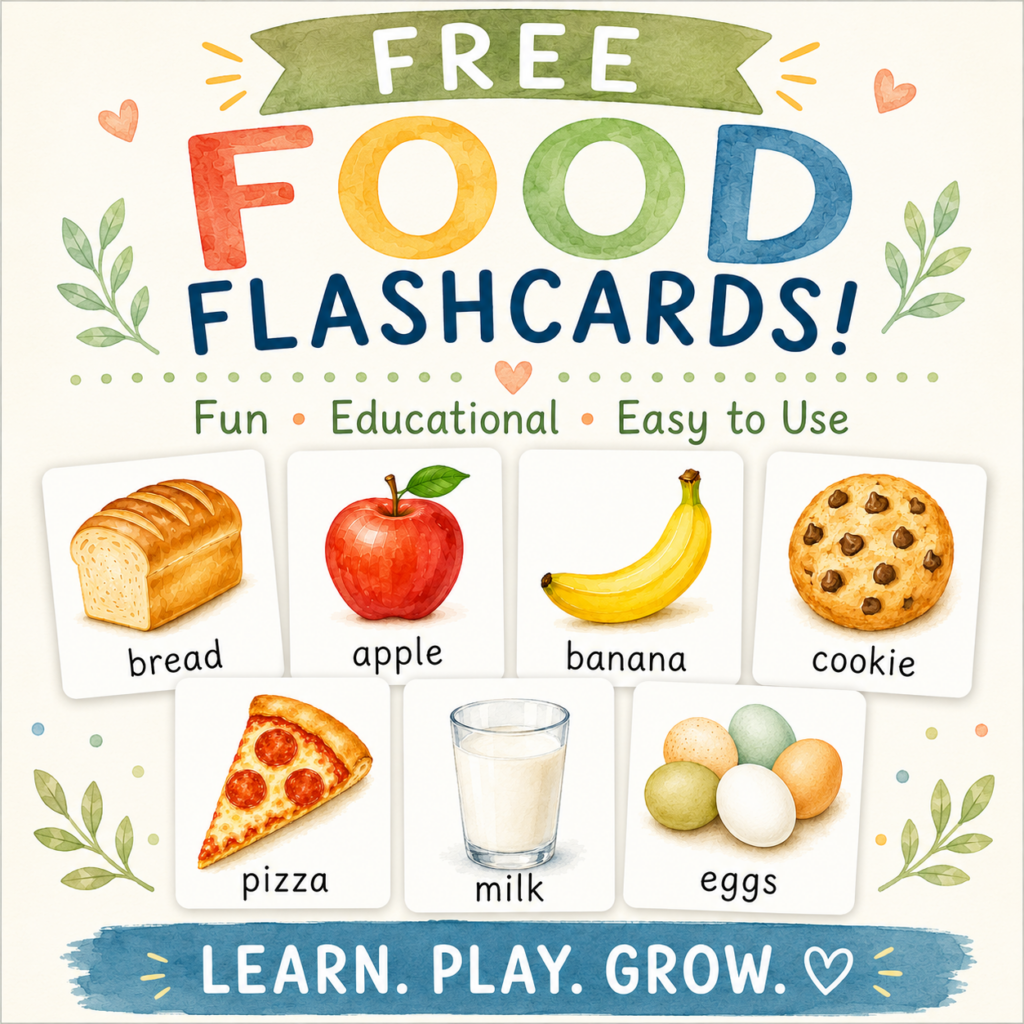
I recently created a set of free watercolor-style food flashcards that are perfect for toddlers, preschoolers, and young learners. These flashcards have a soft watercolor look with simple handwritten-style words underneath each image to make them feel both educational and cozy at the same time.
The cards include foods like:
- Bread
- Apple
- Banana
- Cookie
- Pizza
- Milk
- Eggs
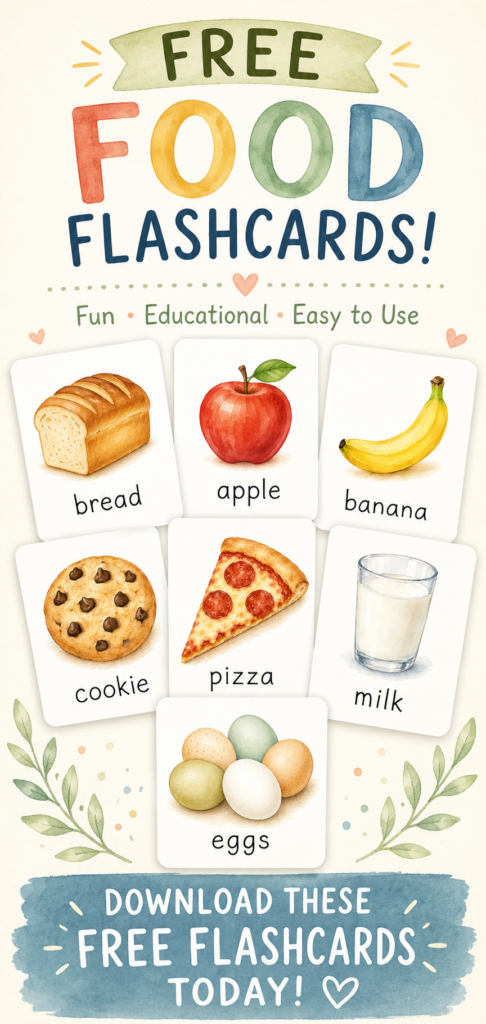
I wanted these flashcards to feel calm, playful, and easy for little kids to recognize. The watercolor style gives them a softer, more elevated look while still keeping them very kid-friendly. They work beautifully for homeschool lessons, preschool learning time, quiet activities, and even classroom centers.
One thing I personally love about printable flashcards is how flexible they are. You can print them at home on cardstock for sturdier cards, or print them on regular paper and slide them into dry erase pockets or laminating sheets. You can print multiple copies for matching games or memory games too.
If you’re using these with toddlers, keep the learning very relaxed and playful. At younger ages, simply talking about the images together is already valuable learning. You do not need formal lessons for children to benefit from flashcards. Sitting on the floor together and chatting about the foods can be enough.
For preschoolers, you can start adding more learning layers like:
- Letter recognition
- Sound recognition
- Color identification
- Sorting activities
- Counting foods
- Beginning reading practice
Another fun activity is using toy foods alongside the flashcards. Kids absolutely love matching pretend food toys to the cards. If you have a play kitchen or toy grocery cart, the flashcards can turn into a pretend shopping game very quickly.
These types of activities also help build confidence in young learners because they feel successful recognizing familiar objects. Little moments like correctly identifying “apple” or “milk” can feel huge to a preschooler.
I also think printable learning activities are wonderful for moms because they are affordable and reusable. Once printed, you can use them over and over again. They’re especially helpful for rainy days, quiet afternoons, road trips, waiting rooms, or moments when you just need a simple activity for your child.
And if you’re looking for a simple way to start incorporating more learning into your day, these free food flashcards are such a fun place to begin. Kids naturally learn through play, conversation, and repetition, and flashcards can make all of that feel lighthearted and exciting.
Whether your child is learning first words, practicing reading, or simply enjoying fun educational activities at home, food flashcards are one of those timeless learning tools that continue to work beautifully year after year.